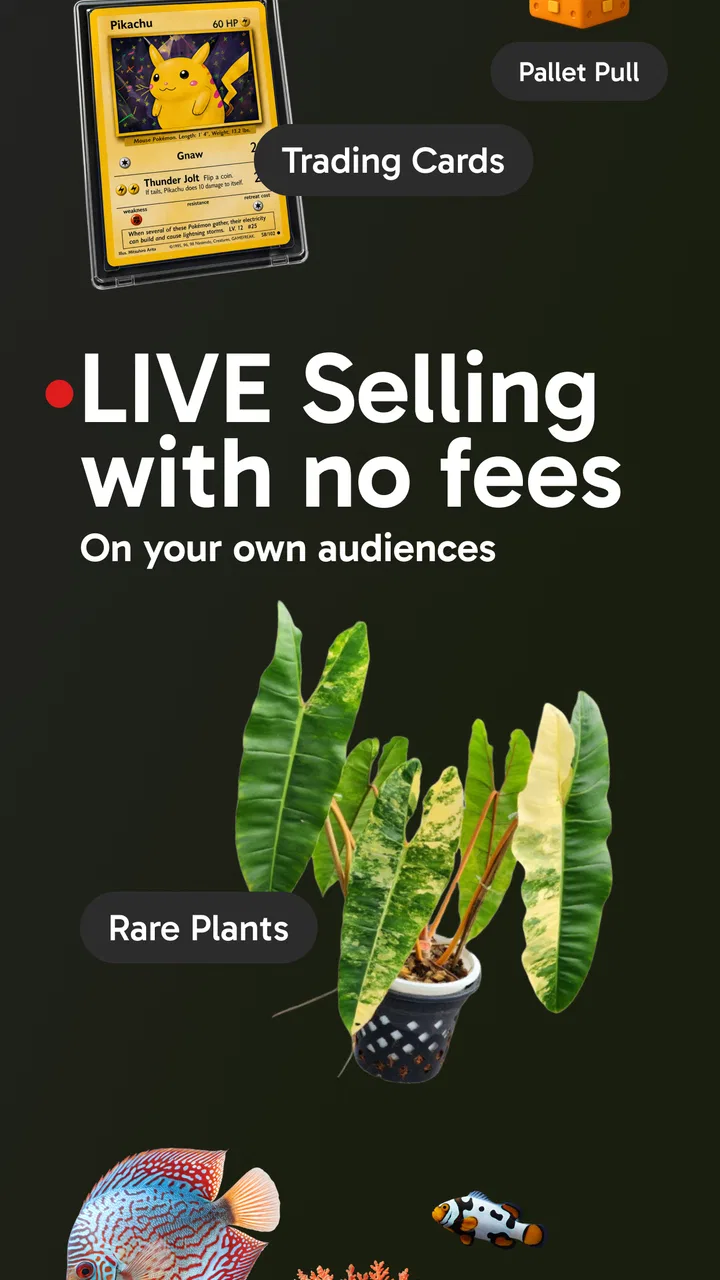
Palmstreet: Buy & Sell LIVE
- 4.6
- Rating
- 100.00K
- Installs
- Free
- Price

 Analysis by App-foxy
I came to Palmstreet: Buy & Sell LIVE expecting another shopping app, but it feels closer to a busy community marketplace where buying is only part of the experience. The app is built around real communities and connections, with people gathering around products, conversations, and live selling rather than simply scrolling through a silent catalog. That difference matters: I found it more engaging than a conventional house-and-home store, although it also asks for more attention and patience.
As a free House & Home app from Plant Story, Palmstreet is aimed at people who enjoy discovering plants, home-related goods, and sellers through a more personal format. It is available to everyone, and the current version is 8.65.0. I would describe it as a social marketplace first and a shopping tool second. If you like seeing products presented by people who are directly involved with them, the format can feel refreshingly human. If you only want to search, compare, and check out as quickly as possible, the social layer may feel like extra work.
How Palmstreet feels in everyday use
The first thing I noticed is that Palmstreet does not treat shopping as a purely private task. The appeal comes from being around other buyers and sellers, seeing what is being presented, and deciding whether a product or conversation deserves my attention. That makes browsing less predictable than using a standard retailer, but it also creates the possibility of finding something I would not have searched for directly.
You May Also Like

 Blood Strike: 2.5 Anniversary
Blood Strike’s Loadouts Turn Every Drop Into a Tactical Gamble
A close look at Blood Strike’s custom loadouts: how fast access to signature weapons reshapes its battle royale rhythm, rewards preparation, and narrows the gap between fights.

 Pandora - Music & Podcasts
Pandora’s Music Is Easy to Start, but Harder to Recover
Pandora’s strength is its low-effort path from a seed to a station. Its weak spot is how much confidence it asks you to place in connection, setup, and quiet recovery.

 8 Ball Pool
 Is Built on Rivalries, Rematches, and Routine
A close look at the rivalries, rematches, shared routines, and unanswered safety questions that turn a quick pool match into a persistent mobile community.

 Samsung Music
’s Quiet Strength Is Playing What You Already Own
Its reach comes less from spectacle than from dependable access to a personal library. That simplicity is both the app’s strongest retention engine and its ceiling.

 AccuWeather: Weather Radar
AccuWeather Review: A Quick, Clear Forecast for Everyday Decisions
For everyday plans, the best forecast is the one you can understand quickly. AccuWeather makes rain timing, radar, and local conditions easy to act on, with a few trade-offs.

 Hill Climb Racing
Why Hill Climb Racing Still Turns Crashes Into One More Run
A tiny car, a bumpy hill and one more upgrade: Hill Climb Racing keeps resurfacing because its simple chaos makes every near-miss feel personal.
More From Our News Desk
View All News


In a usual marketplace, I might type a product name, filter the results, compare a few listings, and leave. Palmstreet encourages a different rhythm. I can enter with only a general interest, watch what is happening, and learn from the way a seller explains an item. That is especially useful for home purchases where appearance, condition, care, or suitability can be difficult to judge from a single photograph.
A realistic example would be someone looking for a new plant for a bright apartment. A normal store may show a neat grid of options, but it may not help much with the practical questions: how large the plant really looks, whether it suits a particular space, or what kind of buyer would enjoy caring for it. In Palmstreet, the community-oriented format can make discovery more informative because the product is presented in a more conversational setting.
That same format has a trade-off. Live or community-driven shopping requires me to be available at the right moment, or at least willing to browse without a fixed endpoint. It is not as efficient as a standard search page when I already know exactly what I want. I would use Palmstreet for exploration and connection, not as my only tool for urgent household purchases.
A marketplace that depends on participation
The app’s strongest quality is its sense of participation. Sellers are not just names attached to product cards, and buyers are not merely anonymous checkout sessions. The store summary focuses on real communities and connections, and that description matches the overall direction I experienced: the value increases when people interact rather than simply consume listings.
This makes the app particularly appealing to hobbyists. Someone who enjoys plants, home decorating, collecting, or learning from other enthusiasts may get more from Palmstreet than someone who sees shopping as a chore. I also think it suits buyers who prefer to understand the person behind a product. That personal context can make a purchase feel more considered.
However, community is not automatically the same as reliability or convenience. I still need to make my own decisions, read details carefully, and avoid treating enthusiasm as proof that an item is right for me. The conversational atmosphere can make products feel exciting, but excitement should not replace checking what I actually need, how much time I can give it, or whether the purchase fits my budget.
What the current version tells me about its direction
The current version, 8.65.0, suggests that Palmstreet is an actively maintained product rather than a forgotten marketplace left in an early state. I see that as important because a social shopping app depends on ongoing attention: communities need activity, sellers need a usable place to present their goods, and buyers need a reason to return.
The app was released on November 4, 2020, so it has had time to establish a recognizable identity beyond a simple launch experiment. I would not interpret the version number alone as proof that every part of the experience is perfect, but it does support the impression of a product that has continued evolving. The current experience feels shaped around keeping discovery and interaction together instead of turning the app into a basic catalog.
Palmstreet has reached over one hundred thousand installs and holds a 4.7 average from around three thousand nine hundred ratings. Those figures indicate that the concept has found a receptive audience, although they do not remove the need for personal judgment. A high average can tell me that many users enjoy the overall experience; it cannot guarantee that I will prefer live browsing to a faster, more traditional shopping flow.
How the evolution affects people already using it
For an existing user, the most meaningful benefit of an evolving app like this is continuity. The community-centered identity remains clear, so returning users are not being asked to abandon the reason they joined in the first place. The app still makes sense for people who want real interaction around home and plant-related shopping rather than a purely transactional interface.
At the same time, a growing marketplace can become more demanding. More activity can mean more things to follow, more products to evaluate, and more opportunities to miss something interesting. I found that I needed to be deliberate about how I browse. Without a personal routine, a community marketplace can easily turn into passive scrolling.
My practical advice is to decide what kind of session I am having before opening Palmstreet. If I am researching an idea, I give myself time to watch, compare, and learn. If I am trying to buy one specific item, I keep my goal narrow and avoid letting the social side distract me. That simple distinction makes the app feel much more useful.
Another useful habit is to separate discovery from commitment. I might save an idea mentally, note what appeals to me, and return to the purchase only after considering the space, care requirements, and total cost. This is one of the less obvious trade-offs of a live marketplace: the format can improve product understanding, but it can also encourage impulse decisions because the experience feels immediate and personal.
Where it compares well with ordinary alternatives
Compared with a conventional online retailer, Palmstreet is more personal and less predictable. A retailer is usually better when I need a standardized product, clear filtering, a fast comparison, or a straightforward repeat order. Palmstreet is better when I want to discover something, hear context from a seller, or feel connected to a group with similar interests.
Compared with a general classifieds marketplace, Palmstreet appears more focused in spirit. A broad classifieds service may offer a larger variety of unrelated goods, but that variety can make it harder to find a community that understands the same interests I have. Palmstreet’s house-and-home focus gives browsing more of a theme, which is useful when I want inspiration rather than random listings.
Compared with social media, the app has a clearer shopping purpose. Social platforms can provide conversation and visual discovery, but purchasing is often secondary or scattered. Palmstreet brings the commercial and community sides closer together. That is convenient for a buyer who wants to move from interest to purchase, although it also means I should pay closer attention to the difference between entertainment and a genuinely suitable product.
The best reason to choose Palmstreet is the combination of discovery and human interaction, not simply the existence of another place to buy things. If that combination sounds appealing, the app has a clear advantage over a silent product grid. If it does not, a conventional retailer will probably feel faster.
Small habits that make the experience better
I would begin by treating the community as a source of context, not as a substitute for personal research. When a seller presents an item enthusiastically, I pay attention to the details that affect my decision: size, suitability for my home, maintenance, and whether the product matches the way I intend to use it. This keeps the social atmosphere helpful without allowing it to make the decision for me.
I would also avoid opening the app only when I am ready to spend money. Palmstreet makes more sense as a place to learn and notice trends before buying. Browsing first can help me understand what I like and what questions to ask. It also reduces the chance that I will purchase something simply because it looked appealing in a fast-moving presentation.
A third tip is to use the app with a specific theme in mind. Instead of wandering through every available community or product, I might focus on improving one room, finding a plant for a particular light level, or learning about a style I have already started exploring. A narrow intention turns the app’s variety into an advantage and makes the social format less overwhelming.
Finally, I would keep conventional shopping tools available for verification and comparison. Palmstreet can be the place where I discover a product or seller, while another source may be better for checking alternatives or deciding whether the price fits my budget. Using the app as part of a wider buying process is more sensible than expecting it to replace every other shopping method.
Limitations that deserve attention
The biggest limitation is efficiency. Palmstreet’s personality is also the reason it may feel slower than a regular store. When I know the exact item I need, I do not necessarily want a community experience around it. I want a clear result, enough information to make a decision, and a simple path to finish. Palmstreet is not the obvious first choice for that situation.
The second limitation is the possibility of distraction. A live or social marketplace can blur the line between browsing for information and browsing for entertainment. That is enjoyable when I have free time, but inconvenient when I am trying to stay focused. I would be cautious about using it during a rushed shopping trip or when I have a strict list.
There is also a learning curve in judging the experience. New users may need time to understand where their attention is best spent and how to distinguish a useful community interaction from a presentation that is simply persuasive. The app benefits from curiosity, but it rewards users who remain selective.
In-app purchases range from $2.49 to $49.99 per item. Because the app itself is free, I would still approach optional spending thoughtfully and decide in advance what value I expect from anything I buy inside the app. The free entry point makes trying Palmstreet easy, but it should not encourage automatic spending.
Who will enjoy it, and who should skip it
I would recommend Palmstreet to plant lovers, home enthusiasts, collectors, and shoppers who enjoy learning from sellers and other buyers. It is also a good match for someone who finds ordinary online shopping too impersonal. The community element can make discovery feel more memorable, especially when I am exploring an interest rather than replacing a household item immediately.
I think it can also suit people who are new to a hobby. A traditional search engine may give endless results without much sense of direction. A community marketplace can help beginners notice what experienced enthusiasts care about and form better questions. The important point is to stay curious without assuming that every recommendation fits every home or lifestyle.
I would skip it, or at least use another service first, if I need rapid delivery, strict product filtering, a highly standardized catalog, or a purely private checkout experience. Someone who dislikes live content, social interaction, or browsing without a fixed endpoint may find the central idea tiring rather than useful.
Parents and younger users should also remember that an Everyone rating describes broad suitability, not a guarantee that every interaction or purchase decision will be appropriate for every individual. I would still supervise spending and encourage careful judgment, particularly when the social energy of the app makes products feel more urgent than they really are.
What I would watch as Palmstreet continues
As the app develops, I would watch how well it balances community energy with shopping clarity. More activity is valuable only if users can still find relevant content and make informed decisions. The strongest future direction would preserve the personal feel while making it easier for a focused buyer to move from discovery to evaluation without getting lost.
I would also pay attention to how the experience serves both sides of its audience. Enthusiastic community members may want conversation and discovery, while practical shoppers may want speed and organization. Palmstreet will remain distinctive if it can support both without becoming either a generic retailer or an unfocused social feed.
For current users, the important question is not whether every update changes the app dramatically. It is whether the core experience keeps becoming more useful without losing its warmth. The release history and current version point to continued development, but my expectations would remain measured: I would judge future changes by how they improve real browsing, clearer decisions, and healthier participation rather than by version numbers alone.
My final take after using it
Palmstreet: Buy & Sell LIVE is a free app with a clear personality. Plant Story has built it around the idea that home shopping can include conversation, discovery, and a sense of belonging. That makes it more interesting than a standard catalog, especially for plant and home enthusiasts who enjoy meeting people around shared interests.
I would not call it the most efficient choice for every purchase. Its social approach can slow me down, tempt me into unplanned browsing, and require more judgment than a simple product search. Those are real limitations, not flaws that can be ignored. Still, they are acceptable when I use the app for the job it handles best: finding inspiration, learning from sellers, and exploring products through a more personal lens.
With its Everyone age rating, free download, and established audience, Palmstreet is easy to try without committing to a traditional shopping subscription. I would recommend starting slowly, choosing a clear interest, and treating the app as a discovery community rather than an automatic buying machine. For me, that is where its value becomes most obvious: it makes shopping feel less like filling a cart and more like joining a conversation that may lead to something genuinely useful for home.
FAQs for Palmstreet: Buy & Sell LIVE
01What is Palmstreet: Buy & Sell LIVE?
Palmstreet: Buy & Sell LIVE is a dynamic marketplace app that allows users to engage in live buying and selling of products. It offers a platform where sellers can showcase their items through live streams, and buyers can interact in real-time, making it a unique and engaging shopping experience.
02How does the live selling feature work in Palmstreet?
The live selling feature allows sellers to broadcast live videos showcasing their products. Buyers can watch these streams, ask questions, and make purchases directly during the session. This interactive approach enhances buyer engagement and allows for immediate feedback and transactions.
03Is there a cost to use Palmstreet: Buy & Sell LIVE?
Downloading Palmstreet is free for both Android and iOS users. However, sellers may incur fees based on their transactions or premium features they opt to use within the app. It’s advisable to review the app’s pricing details for any additional costs related to selling.
04What security measures are in place for transactions on Palmstreet?
Palmstreet employs robust encryption and secure payment gateways to protect user data and transactions. The app also offers user reviews and ratings to help buyers and sellers make informed decisions. Always ensure your account information is secure and report any suspicious activity immediately.
05Can I use Palmstreet internationally?
Yes, Palmstreet is designed for international use, allowing users to buy and sell across different countries. However, it's essential to check the availability of certain features and the shipping capabilities in specific regions, as these might vary based on location.
Pros
- Intuitive live auction interface
- Real-time bidding excitement
- Secure payment options
- User-friendly navigation
- Wide variety of products
Cons
- Limited customer support hours
- Occasional app crashes
- In-app ads can be intrusive
- Shipping fees vary widely
- Requires stable internet connection

Palmstreet: Buy & Sell LIVE
Gallery